
Related illustrations
 1776.22
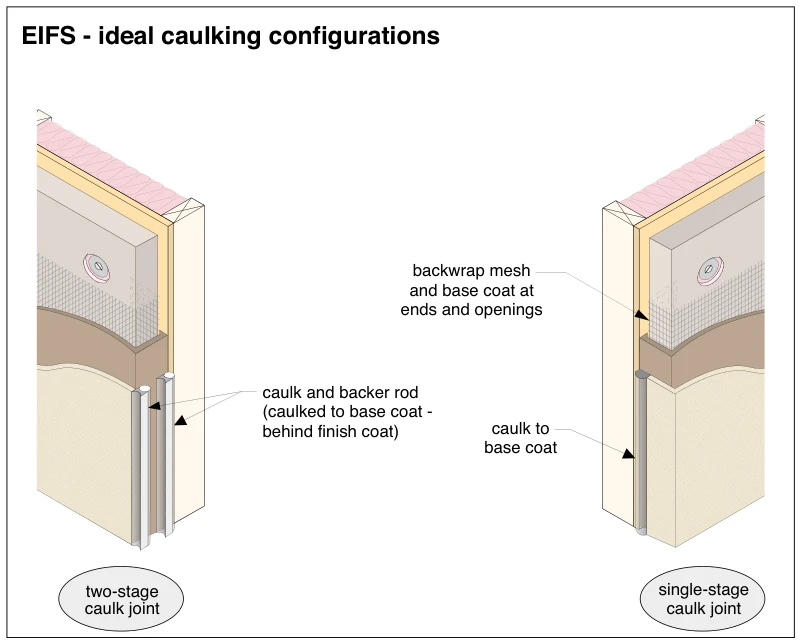
EIFS - ideal caulking configurations
· p. 319
The illustration shows cutaway EIFS wall terminations with a two-stage caulk joint on the left and a single-stage caulk joint on the right. The cutaways expose insulation board, reinforcing mesh, base coat, and finish co
 1336
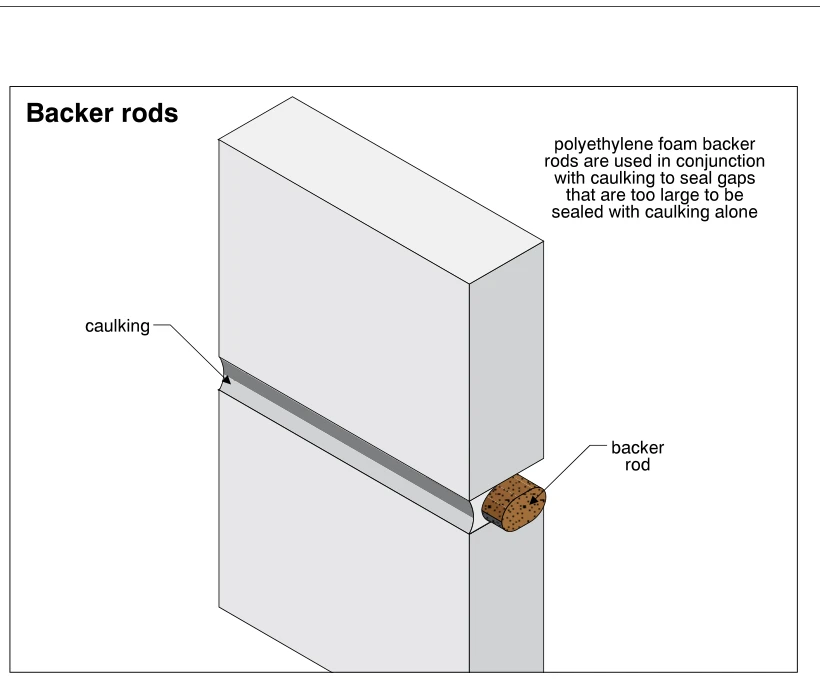
1336Backer rods
· p. 239
The illustration shows a horizontal joint between two building elements, with caulking applied along the exposed face. A cylindrical polyethylene foam backer rod is fitted into the gap behind the caulking, with its end e
 1686.6
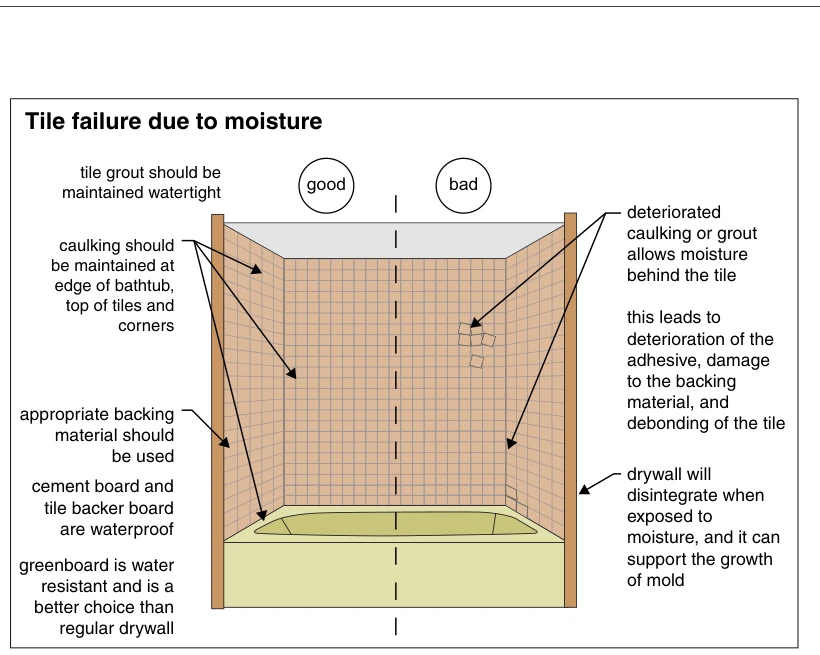
Tile failure due to moisture
· p. 300
The illustration shows a bathtub with a three-sided tiled surround, divided by a dashed line into good and bad conditions. The good side identifies watertight grout, maintained caulking at the bathtub edge, tile tops and
 1817
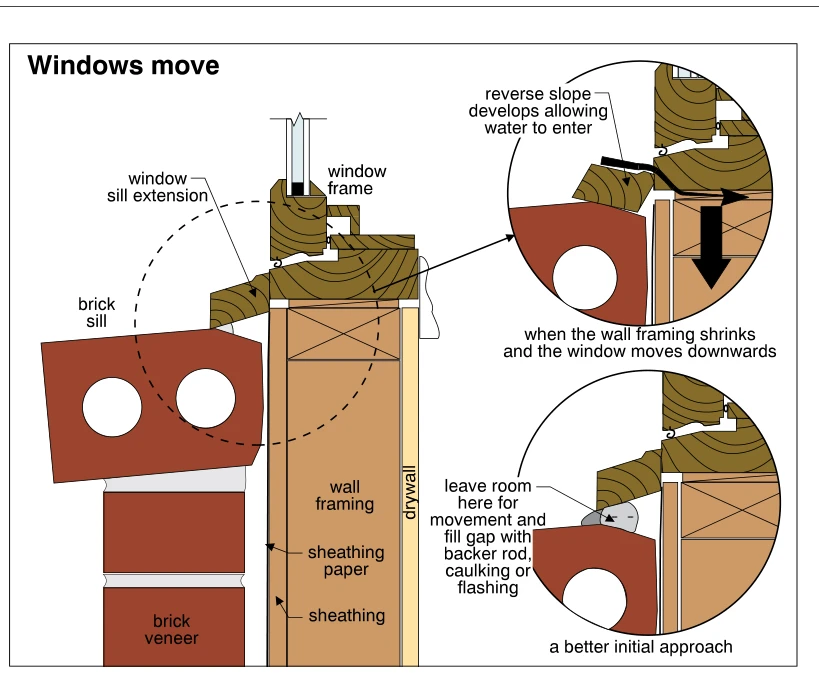
1817Windows move
· p. 328
A wall section shows a wood window frame and sill extension above a brick sill in a brick-veneer wall, with framing, sheathing, sheathing paper and interior drywall identified. The upper detail shows the window moving do
 0069
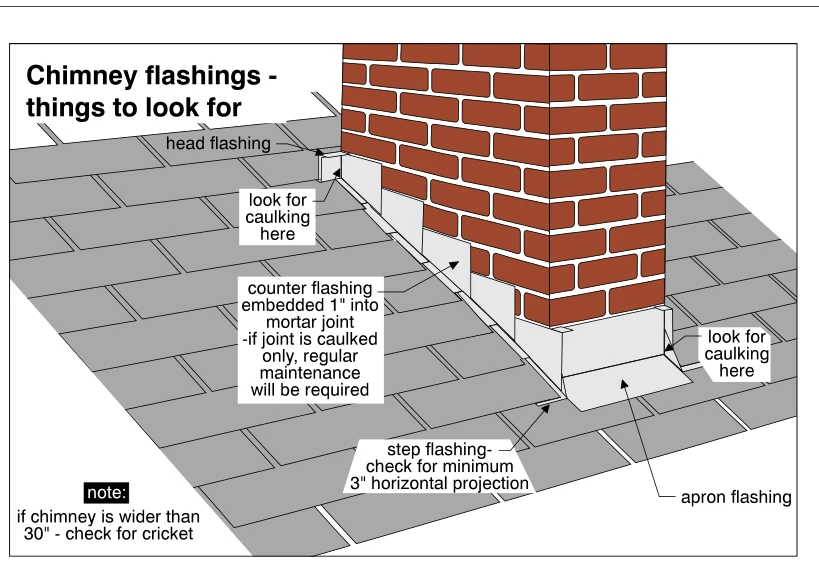
0069Chimney flashings - things to look for
· p. 20
The illustration shows a brick chimney penetrating a sloped shingle roof, with head flashing on the uphill side, step flashing along the side, and apron flashing on the downhill face. Counter flashing overlaps the roof f
 1776.8
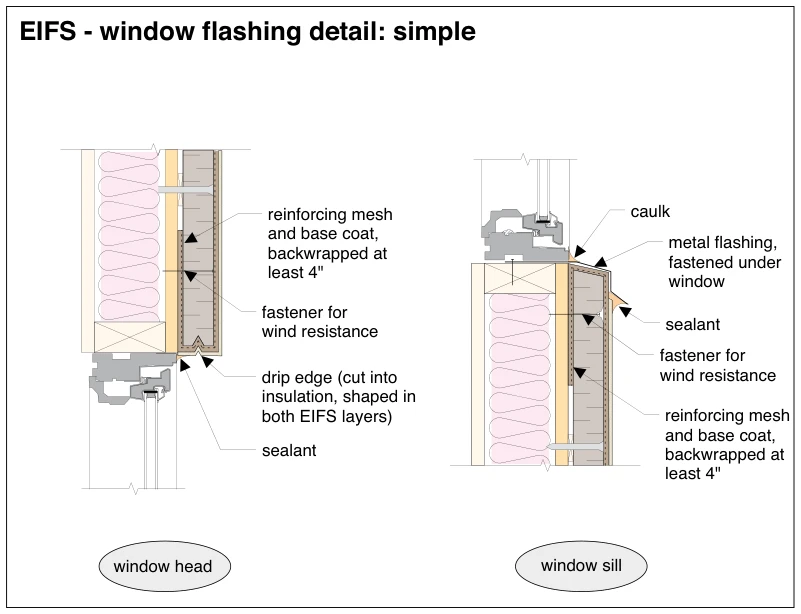
EIFS - window flashing detail: simple
· p. 318
Two sectional details show EIFS terminations at a window head and window sill in an insulated framed wall. Both details specify reinforcing mesh and base coat backwrapped at least 4 inches and fasteners for wind resistan
 1775
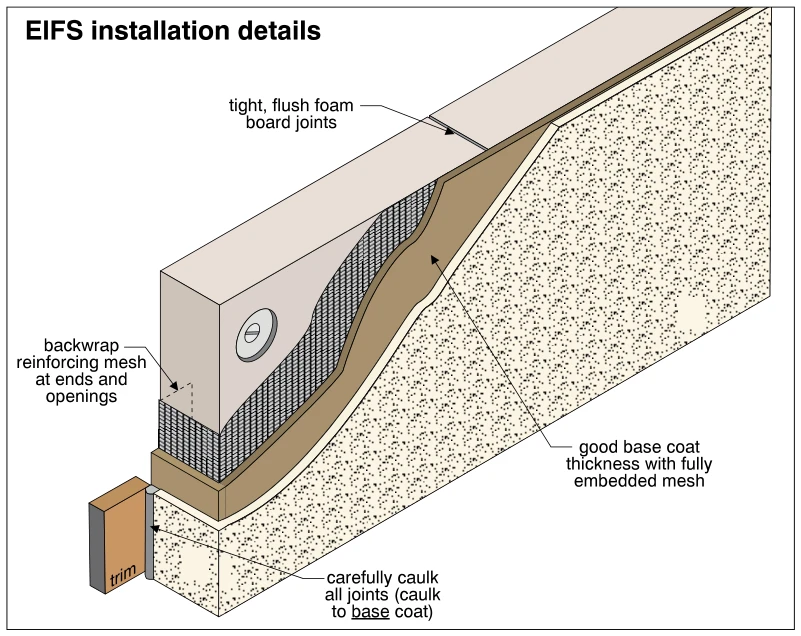
1775EIFS installation details
· p. 317
The illustration shows a cutaway of an exterior insulation and finish system (EIFS), exposing foam insulation board, reinforcing mesh, base coat, and a textured exterior finish. Foam board joints are shown tight and flus
 1816
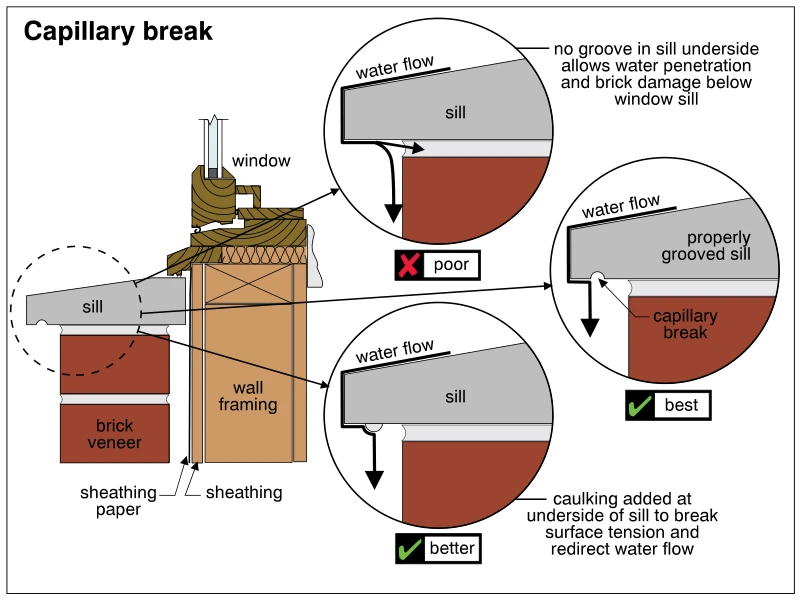
1816Capillary break
· p. 327
A window and wall cross-section shows a projecting sill above brick veneer, with wall framing, sheathing, and sheathing paper behind the masonry. Three enlarged details compare how water flows over the sill edge and alon